

Trigger Warning
Or why we behave the worst with the people we are closest to


How do you feel about the word triggered? Would it feel more comfortable if I replaced it with upset, frustrated, angry, outraged, shut down, overwhelmed, sad, ashamed, or afraid? These are all emotional responses to triggering experiences—different expressions of the same underlying nervous system overwhelm.
In my work with both individuals and relationships, triggered behavior is a recurring topic. What triggers us? Why does it affect us so strongly? And what happens inside us when we’re activated? The closer a relationship is, the more power it has to push us toward our emotional limits. Experiences throughout our lives—especially in childhood—shape how we respond in these moments.
Most of us have heard of fight or flight, but it was Terry Real’s book Us that really clarified this concept for me in a relational context. When we’re emotionally overwhelmed, our bodies take over. We tend to respond in one of two ways: we lash out, or we shut down. These are not conscious choices so much as survival responses.
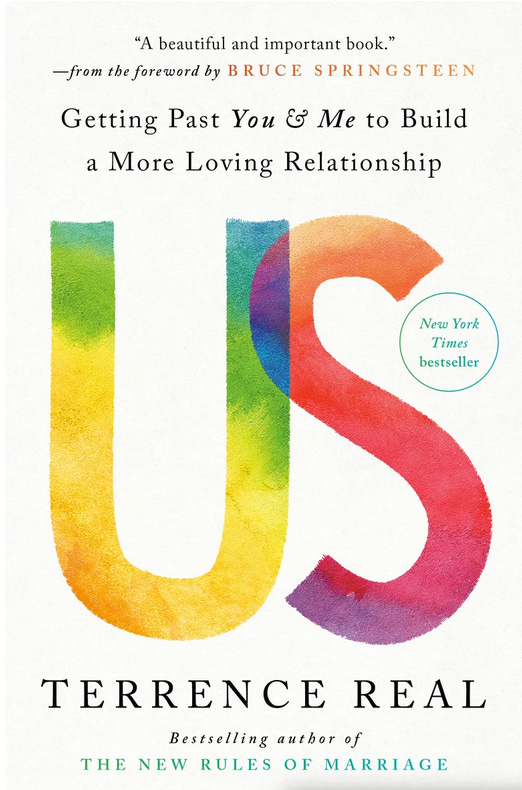
Whether we shut down or lash out, shame is often close by. For the person who shuts down, they were often taught that feelings are dangerous—that others aren’t interested in them, or that expressing them might lead to punishment or rejection. Over time, they learn to minimize their inner experience and defer to others. For those who lash out, the message was often similar: feelings were unwelcome. Instead of disappearing, those feelings get bottled up until they finally erupt.
There were two concepts from Us that I couldn’t stop thinking about:
Harshness is never helpful
Righteous anger
They forced me to look honestly at my own relationships. As someone who grew up in a highly reactive household, I realized that I, too, had been lashing out at people I love—my husband, my mom, my kids—justified by the belief that if someone triggered me, I had the right to unleash my reaction onto them.
At some point, I decided that this no longer reflected my values.
I had to create an entirely new mindset—one in which it is my responsibility to communicate my needs clearly, name the consequences if those needs are not met, and then uphold those boundaries. Sometimes that means holding firm. Sometimes it means consciously choosing flexibility. But either way, the responsibility is mine. My circumstances and my response.
Ultimately, no one else is responsible for regulating our emotional wellbeing. This doesn’t mean we don’t impact one another. But if someone’s behavior is upsetting to us, the only thing we can truly control is how we respond. For people that tend to respond by lashing out, we do not have the right to be violent in the name of being triggered (yelling, slamming doors, hanging up on people, breaking things, hitting people, or using words meant to wound). We have to find different ways to communicate difficult feelings.
Terry Real refers to this reactive part of us as the adaptive child—the part that learned how to survive emotionally but was never taught how to handle difficult feelings maturely. Healing requires accessing our wise adult self: the part of us that can pause, reflect, and communicate while emotionally regulated.
I also had to learn to stop taking other people’s behavior so personally. When someone doesn’t do exactly what we ask, it doesn’t automatically mean they don’t care or don’t value us. Often, it means they are navigating their own limits, fears, or capacities.
This shift has taken an enormous amount of work. But it has also allowed me to experience a significant decrease in relational anxiety. I feel more authentic in my relationships and more capable of staying present—even when things are hard. Most importantly, it has opened the door to deeper, more connected relationships.
In the coming weeks, I’ll be sharing tools that have helped me and my clients:
Understand and identify triggers
Examine the systems in life that create ongoing stress
Implement and uphold boundaries
Identify areas of resistance and work toward acceptance
Learn productive alternatives to harmful communication
Use mindfulness to reduce anxiety and emotional reactivity
Take ownership of life with greater clarity and peace
I’m also creating a group for people who are interested in working directly with reactivity in a supportive, contained environment. If this speaks to you, you can sign up to receive news and more information here. I’m excited to share more about this in the coming weeks.
.